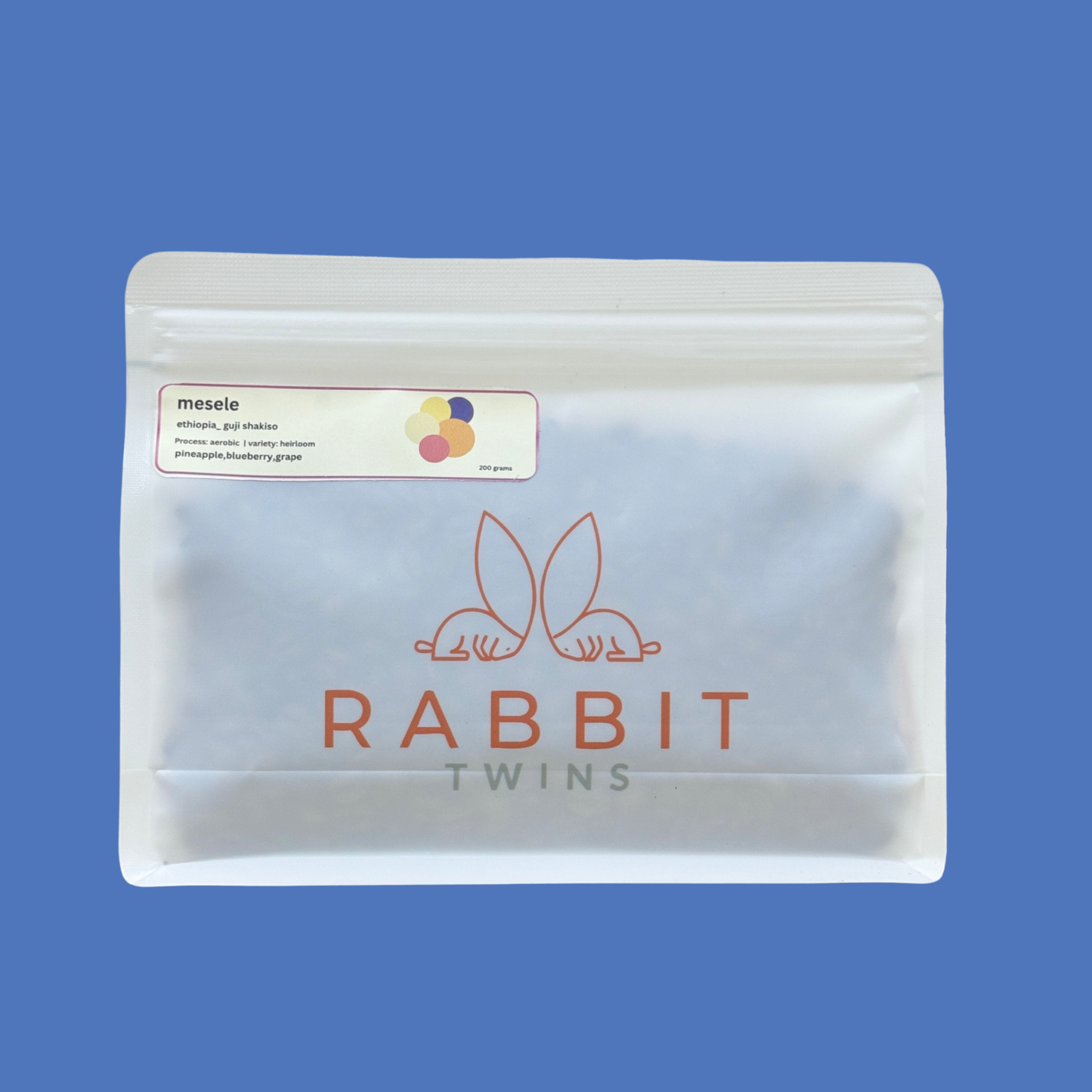
RABBIT TWINS
MESELE_ETHIOPIA
MESELE_ETHIOPIA
لم نتمكن من تحميل توفر الاستلام
- Variety: HEIRLOOM
- Country: ETHIOPIA
- Region: GUJI
- Process: Aerobic 4 Days
- Altitude:1900 - 2,200 MASL
- Roast Level: Light Medium
-
TASTING NOTES : PINEAPPLE,BLUEBERRY, GRAPE,HIBISCUS
السلالة: ايرلوم
البلد: إثيوبيا
المنطقة: قوجي
المعالجة: هوائي ٤ ايام
الارتفاع : 1900-2200 فوق مستوى سطح البحر
مستوى التحميص: فاتح متوسط
ملاحظات التذوق:اناناس ,توت ازرق ,عنب،كركديه
Aerobic Process
First Stage: Picking and Sorting
Ripened coffee cherries are picked and taken to raised drying beds, where they are sorted by hand to remove
green and overripe cherries.
Second Stage: Fermentation
After sorting, the cherries are placed into open-air tanks measuring 2 m × 3 m × 1.5 m, with up to 10 tons
processed at a time. Exposure to open air, sunlight, and heat initiates aerobic fermentation immediately, causing
the cherries to emit aromas reminiscent of ripening mango and banana.
By the second and third days, the fermentation becomes exothermic and begins generating heat. This heat must
be carefully monitored to prevent over-fermentation or a runaway reaction.
After 96 hours (the fourth day), the cherries are ready to be removed from the tanks and transferred to the drying
beds.
Third Stage: Drying
The cherries are taken out of the food-grade bags and spread across the drying beds, where they are allowed to
slow-dry over a period of 14 to 21 days. Continuous monitoring ensures uniform and consistent drying across all
batches.
Fourth Stage: Resting and Storing
Once dried, the beans are collected from the beds and stored in jute bags, allowing them to rest and further
develop their flavor. The resting stage typically lasts between 2 and 4 months.
Fifth Stage: Pulping and Processing
After resting, the beans are checked for their moisture level to determine readiness for hulling. The cherry skins
must be dry and brittle enough for the hulling machines to remove both the outer layer and the inner parchment
without damaging the beans. Depending on temperature and conditions, an additional 1 to 2 days of drying may
be required to achieve the proper brittleness.
Once hulled and the parchment removed, the green beans are sealed in food-grade plastic bags to preserve their
freshness and then transported to a cleaning and packaging facility in Addis Ababa.
Sixth Stage: Final Processing
Upon arrival at the processing facility, the beans undergo further cleaning to remove impurities such as broken,
oversized, black, or immature beans, as well as any remaining foreign matter like parchment fragments. After
cleaning, the beans are packed in food-grade plastic bags and jute bags and shipped to the international market.
المعالجة الهوائية:
المرحلة الأولى: القطف والفرز
يتم قطف ثمار القهوة الناضجة ونقلها إلى أسِرّة التجفيف المرتفعة، حيث تُفرز يدويًا لإزالة الثمار الخضراء أو المفرطة في النضج.
المرحلة الثانية: التخمير
بعد الفرز، توضع الثمار في خزانات مفتوحة بقياس 2 م × 3 م × 1.5 م، حيث تتم معالجة ما يصل إلى 10 أطنان في كل مرة.
يؤدي تعرضها للهواء وأشعة الشمس والحرارة إلى بدء التخمير الهوائي فورًا، مما يجعل الثمار تُطلق روائح تشبه المانجو والموز الناضج.
في اليومين الثاني والثالث، يصبح التخمير طاردًا للحرارة (Exothermic) ويبدأ بتوليد حرارة، لذا يجب مراقبته بعناية لتجنب فرط التخمير أو حدوث تفاعل غير مسيطر عليه.
بعد 96 ساعة (اليوم الرابع)، تصبح الثمار جاهزة لإخراجها من الخزانات ونقلها إلى أسِرّة التجفيف.
المرحلة الثالثة: التجفيف
تُخرج الثمار من الأكياس الغذائية وتُفرد على أسِرّة التجفيف، حيث تُترك لتجف ببطء لمدة تتراوح بين 14 إلى 21 يومًا.
تتم مراقبة العملية بشكل مستمر لضمان تجفيف متساوٍ ومتجانس لجميع الدُفعات.
المرحلة الرابعة: الراحة والتخزين
بعد التجفيف، تُجمع الحبوب وتُخزن في أكياس من الخيش (الجوت)، لتُترك في مرحلة الراحة التي تساعد على تطوير النكهة بشكل أفضل.
تستمر هذه المرحلة عادةً من شهرين إلى أربعة أشهر.
المرحلة الخامسة: التقشير والمعالجة
بعد فترة الراحة، يتم فحص مستوى الرطوبة في الحبوب لتحديد جاهزيتها للتقشير.
يجب أن تكون قشور الكرز جافة وهشة بما يكفي لتتمكن آلات التقشير من إزالة الطبقة الخارجية وطبقة البرشمان الداخلية دون إتلاف الحبوب.
وبحسب درجة الحرارة والظروف، قد تحتاج الحبوب إلى يوم أو يومين إضافيين من التجفيف للوصول إلى درجة الهشاشة المطلوبة.
بعد التقشير وإزالة طبقة البرشمان، تُعبأ الحبوب الخضراء في أكياس بلاستيكية مخصصة للأغذية للحفاظ على جودتها، ثم تُنقل إلى منشأة تنظيف وتعبئة في أديس أبابا.
المرحلة السادسة: المعالجة النهائية
عند وصول الحبوب إلى منشأة المعالجة، تخضع لعملية تنظيف إضافية لإزالة الشوائب مثل الحبوب المكسورة أو الكبيرة جدًا أو السوداء أو غير الناضجة، بالإضافة إلى أي مواد غريبة متبقية مثل بقايا البرشمان.
بعد التنظيف، تُعبأ الحبوب في أكياس بلاستيكية وأكياس خيش مخصصة للأغذية، ثم تُشحن إلى الأسواق العالمية
Share